
If Egyptian is the language of cinema, Levantine is the language of song and the heart. That is the name given to the family of dialects along the eastern Mediterranean — soft, melodic, a little drawn-out. Fairuz sang in it, and her voice still drifts from Beirut windows every morning. Turkish soap operas were dubbed into it, and their storylines made the whole Arab world — from Morocco to Oman — fall in love. And almost anyone you ask which Arabic is the most pleasant to the ear will name Levantine without a second thought.
It is also a dialect that is remarkably easy to love. It carries less of the throaty hardness we expect from Arabic and far more musicality. Let's unpack where it comes from, how it sounds, and why an entire region speaks it, sings in it, and cries over TV dramas in it.
Where it's spoken: one sea, four countries
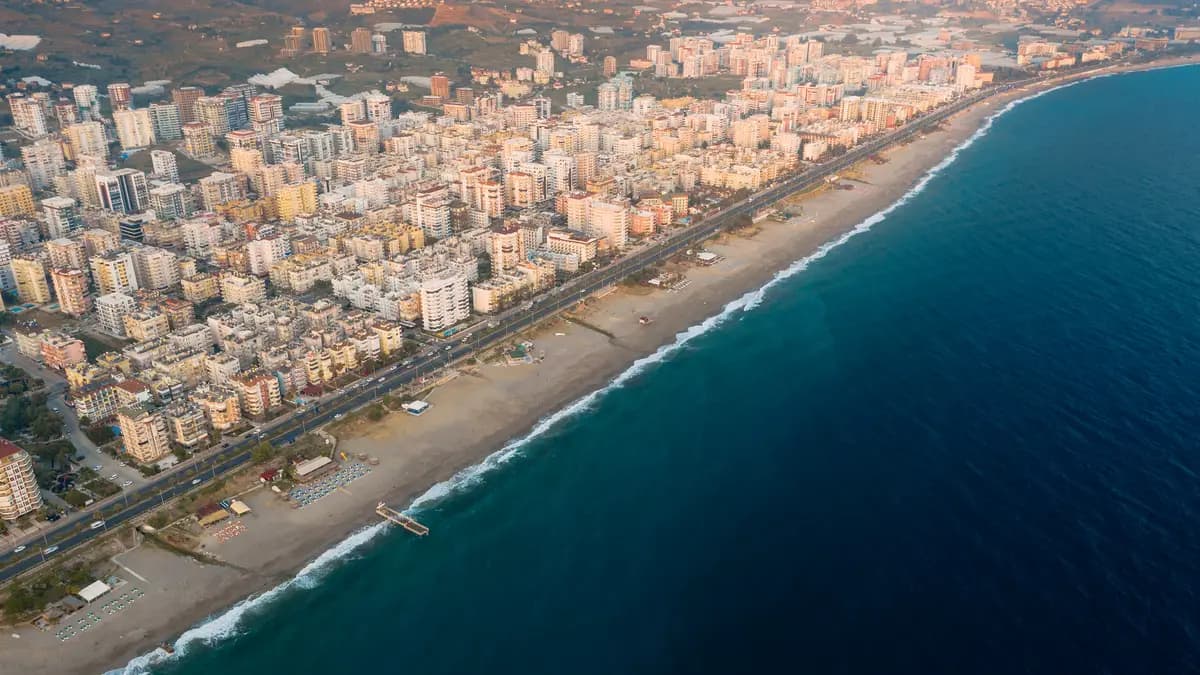
Levantine is the Arabic of the Levant, the eastern shore of the Mediterranean: Syria, Lebanon, Jordan and Palestine. Strictly speaking there is no single "Levantine language" — it is a family of close-knit dialects. Damascus, Beirut, Amman and Jerusalem sound slightly different: somewhere the vowels stretch more, somewhere French words have crept into the vocabulary (Lebanon) or Turkish ones have. Yet a speaker from any of these countries understands a neighbour effortlessly — the differences are more like those between two accents of the same language than between separate tongues.
Arabs call this dialect shAmi, from the old name of the region, ash-Shams, which once meant both Damascus and the whole Levant at once. So when a native says he "speaks Shami," he means exactly this soft Mediterranean speech.
How it sounds: softness, "imala" and its own words
If you have already peeked at Egyptian, Levantine will feel both familiar and different. Here is what sets it apart to the ear.
The letter ق is a glottal stop. In urban Levantine (Beirut, Damascus) ق most often turns into a light catch of the voice, an apostrophe sound: قلب reads as 'alb — "heart." Here Levantine agrees with Egyptian and sharply parts ways with the Gulf, where the same letter is a hard "g."
"Imala" — the signature vowel tilt. A long "a," and especially a word ending in "-a," leans toward "e" in Levantine: that recognisable lilt that makes the speech sound like singing. The greeting مرحبا (mArhaba) in a Lebanese mouth sounds closer to "mArhabe." It isn't a mistake or sloppiness — it's a feature of the dialect, its "accent," and precisely why people adore it.
The letter ج is soft. Where an Egyptian says a hard "g" (جميل — gamIl, "beautiful"), a Levantine softens it almost to the French "j": "jamIl." A small thing, but once you catch it you'll instantly tell a Beiruti from a Cairene.
Its own words. The real marker of any dialect isn't the sounds but the vocabulary. Here's the basic set that gives a Levantine away:
| Meaning | Egyptian | Levantine |
|---|---|---|
| "what?" | إيه (eh) | شو (shu) |
| "I want" | عايز (Aayez) | بدي (bEddi) |
| "now" | دلوقتي (dilwA'ti) | هلق (halla') |
| "how are you?" | إزيك (izzAyyak) | كيف حالك (kIf hAlak) |
The Levantine "I want" is especially neat: بدي (bEddi) is not a verb but a short construction, something like "my wish is …" — "I want coffee," "I want to sleep," "I want to go home," all built around that one word, and you learn it in a minute.
The language of culture: Fairuz at dawn and Turkish dramas
Levantine has a special bond with culture, and that bond is exactly what made it understood far beyond the Levant.
Start with Fairuz. The Lebanese singer's voice became literally part of the daily rhythm: in many homes in Lebanon — and Syria, and Jordan — her songs play over the morning coffee, alongside صباح الخير (sabAh il-khEyr — "good morning"). There is even a half-joking rule: before noon the radio plays nothing but Fairuz. Her diction is crisp, the tempo slow, the words simple and human — this is the ideal, almost textbook Levantine.
The second engine is the screen. In the late 2000s a wave of Turkish soap operas swept the Arab world, dubbed specifically into Syrian Levantine. Millions of viewers from Casablanca to Kuwait followed characters who spoke Shami — and soft Levantine became familiar and comprehensible to them, even if they themselves spoke otherwise. Ever since, dubbing and Lebanese pop have kept exporting this dialect across the region.
Hence an important takeaway for a beginner: you will hear Levantine far more often than you'd think — in songs, clips and series. Which means you always have an endless supply of living material at your fingertips.
Who should learn it
Levantine is an excellent choice if:
- you're tied to the region — family, friends, business in Lebanon or Jordan, study, humanitarian or diplomatic work in Syria and Palestine;
- you love Arabic music — from classic Fairuz to modern Lebanese pop: understanding the words of your favourite songs is a joy in itself;
- you need a "second" dialect after Egyptian — and here Levantine shines. Much overlaps: the negation مش (mish — "not"), for instance, works the same way in Cairo and in Beirut. Once you've mastered one dialect, you'll pick up the second noticeably faster.
One thing to remember: like any dialect, Levantine is the language of the street and the home, not of official documents. For news, books and formal correspondence you still need Standard Arabic. But if your goal is to understand people and songs rather than news anchors, you've chosen the right door.
How to start: a song and a series instead of a table
Learning Levantine from dry tables is like studying music from sheet notation without ever hearing the melody. The dialect lives in sound, so you have to enter it through sound.
- Take one slow Fairuz song. Not the whole album — one song. Break it down line by line: one new word at a time, listening to how it sounds.
- Sing along. A chorus you've hummed ten times lodges in your memory on its own — those are the first ten phrases you'll never forget.
- Add a series. Pick a short scene from a dubbed or Lebanese show, watch it for the plot, then go through it again, working out the lines.
- Repeat aloud after the character, copying that soft intonation. Your mouth needs to get used to the "imala" just as much as your ear does.
A song's lyrics are living dialect in its purest, most concentrated form. That's why it matters to hear a word in its actual Levantine form and in a native voice, not in "Arabic in general": our translator gives any word in the exact dialect with audio, so you catch that Beirut softness rather than an averaged-out sound.
In short
- Levantine is the Arabic of Syria, Lebanon, Jordan and Palestine; the dialects are close and mutually intelligible, and its local name is "Shami."
- It sounds soft: ق is often a glottal "'", "imala" tilts "a" toward "e," and ج softens to "j."
- Its own words give a Levantine away: شو (shu — "what"), بدي (bEddi — "I want"), هلق (halla' — "now").
- It's the language of song and screen: Fairuz and dubbed dramas spread it across the region — living material is everywhere.
- It's a great "second" dialect after Egyptian (the shared negation مش and more), and the best way to learn it is through songs and series, out loud.
You can't feel Levantine from a column of words — you have to hear it. Our dialect translator gives a word in its exact Levantine form and in a native voice, and the video trainer turns a favourite clip or series into a word-by-word breakdown: tap a line and you see the translation, the root and the pronunciation. Start with one Fairuz song over your morning coffee — and very soon you'll understand why a whole region loves this soft Mediterranean Arabic.
Ready to study for real?
Talkarabicnow materials: a free reading base, Living Egyptian and Gulf — with audio, trainers and self-check tests.