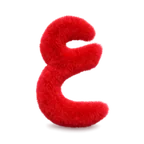
The Arabic alphabet
All 28 letters with audio: how each one sounds, how it is written, how it changes inside a word.
The platform is built for people who already read Arabic. If you do not know the letters yet, start here. The page is fully open — no subscription, no sign-up. The letters come from our school textbook “Arabic Reading and Writing”.
The video is coming soon — read the guide below for now
- 1The alphabet and the reading-and-writing book are free — no subscription needed.
- 2A key to our transcription: aa is ع, 7 is ح, emphatic letters are shown in red.
- 3The letter you tapped turns dark — its card opens below the grid.
- 4Red letters are the emphatics (ص ض ط ظ) — pronounced harder and deeper.
Where to start
- Open the alphabet page — the quickest way is the “Go to the section” button at the top of this guide (the address is /alphabet; it is not in the header menu yet). At the top there is a grid of 28 letters: the letter itself, its name and its transliteration symbol.
- The card is always open below the grid — on alif when you arrive. Tap any other letter and the card switches to it.
- Read how the letter sounds and watch the "How to write it" animation: the pen traces the line right to left, like in a copybook. The "Replay" button plays it again.
- Tap the speaker next to the example — a neural native voice reads the word.
- Move on to the next letter. All 28 work the same way.
What is inside a card
Sound — how the letter is pronounced and what it is usually confused with. On the right there is a badge with the group from the textbook: "Little boats", "Hook letters", "Pharaoh letters" and so on. Letters that share a shape are easier to learn together.
How to write it — an animation that draws the letter stroke by stroke, with the dots added at the end. To be honest: so far it exists for seven letters — alif, ba, ta, tha, nun, ra, za — and we are adding the rest group by group. If a letter has no animation, the rest of the card still works.
How it's written — the same letter in four forms: isolated, initial, medial, final. This is where beginners panic: the letter looks different every time, but it is one letter. Six letters — alif, dal, dhal, ra, za, waw — never join the letter that follows, and the card says so.
Example — a short word with that letter: the Arabic spelling, the transliteration and the meaning. The button on the left reads it aloud. Next to the speaker there is a voice menu: female or male, and which speaker.
Memory hint — a picture in words from the textbook: the dot under "ba" is the cow's muzzle, "jim" is laughing "ha-ha-ha". The card holds no illustrations, only the text. Not every letter has one.
In Egypt — shown when Cairo pronunciation differs (for example, "jim" is read as a hard "g"). Again, only where it matters.
How to read our transliteration
We write the way we teach in class, not the way academic tables do:
- aa — the letter ع, a throaty sound, not a plain "a".
- 7 — the letter ح, a breathy "h" pushed out from deep in the throat.
- th and dh — ث and ذ, as in think and this.
- kh — the rasping خ.
- Red letters — the emphatic ص ض ط ظ, pronounced harder and deeper. In the transliteration they carry a dot underneath: ṣ, ḍ, ṭ, ẓ.
- A doubled vowel — a long one: baab, tamriin.
What else is on the page
The book — "Read the book online" opens the textbook "Arabic Reading and Writing" in your browser. The introduction, the chapter on the language and the whole alphabet are there; phonetics and calligraphy are not written yet — in their place the page shows a "chapter in preparation" note. The PDF is not up yet, so instead of a download button there is a "coming soon" label. One caveat: the book text itself is in Russian — only the letter cards inside it are bilingual.
Video lessons — the block is ready, but there are no videos in it yet; it says so on the page.
The course — the card under the table leads to the Courses page, where the "Arabic Reading and Writing" course lives: video lessons, copybook practice and tests. Its first tier is free on the Russian site once you sign in and fill in your profile; on this (.com) site the course is still marked as coming soon. The table is a quick reference; the course is what actually teaches you to read and write.
Habits that help
- Take three or four letters a day, not the whole alphabet in one evening. In a week you will read your first word.
- Always play the example and repeat it out loud. Letters do not stick through the eyes alone.
- Learn letters by shape group — the "little boats" differ only in their dots, so that is four letters at once.
- The moment you start recognising letters in text, go to "Analyze video", even if you read slowly. That is where letters turn into speech.
- Come back here as a reference: forgot how "kaf" looks in the middle of a word? Open it and check.
Common questions
Do I need a subscription or an account? No. The alphabet page is fully open and needs no sign-up.
I tapped a letter and there is no writing animation. That letter has no copybook animation yet — we add them in groups. Sound, forms, example and audio work for all 28.
Which dialect reads the examples? Egyptian; it is fixed on this page. You can change the voice only — female or male and which speaker, in the menu next to the speaker button.
I want proper reading lessons, not a reference. Then take the "Arabic Reading and Writing" course — the card under the letter table leads to the Courses page where it sits.